
If you have a garage workshop, detached shed, or outbuilding on your property, you already know how quickly a single extension cord stops being enough. Running power tools, lighting, a compressor, or even a mini-split unit puts demands on your electrical system that a long cord simply cannot safely meet. Adding a subpanel for a garage or outbuilding is one of the smartest electrical upgrades a Jacksonville NC homeowner can make — and as a locally owned and operated electrical contractor serving Jacksonville and Eastern North Carolina, we want to help you understand exactly what that process involves.
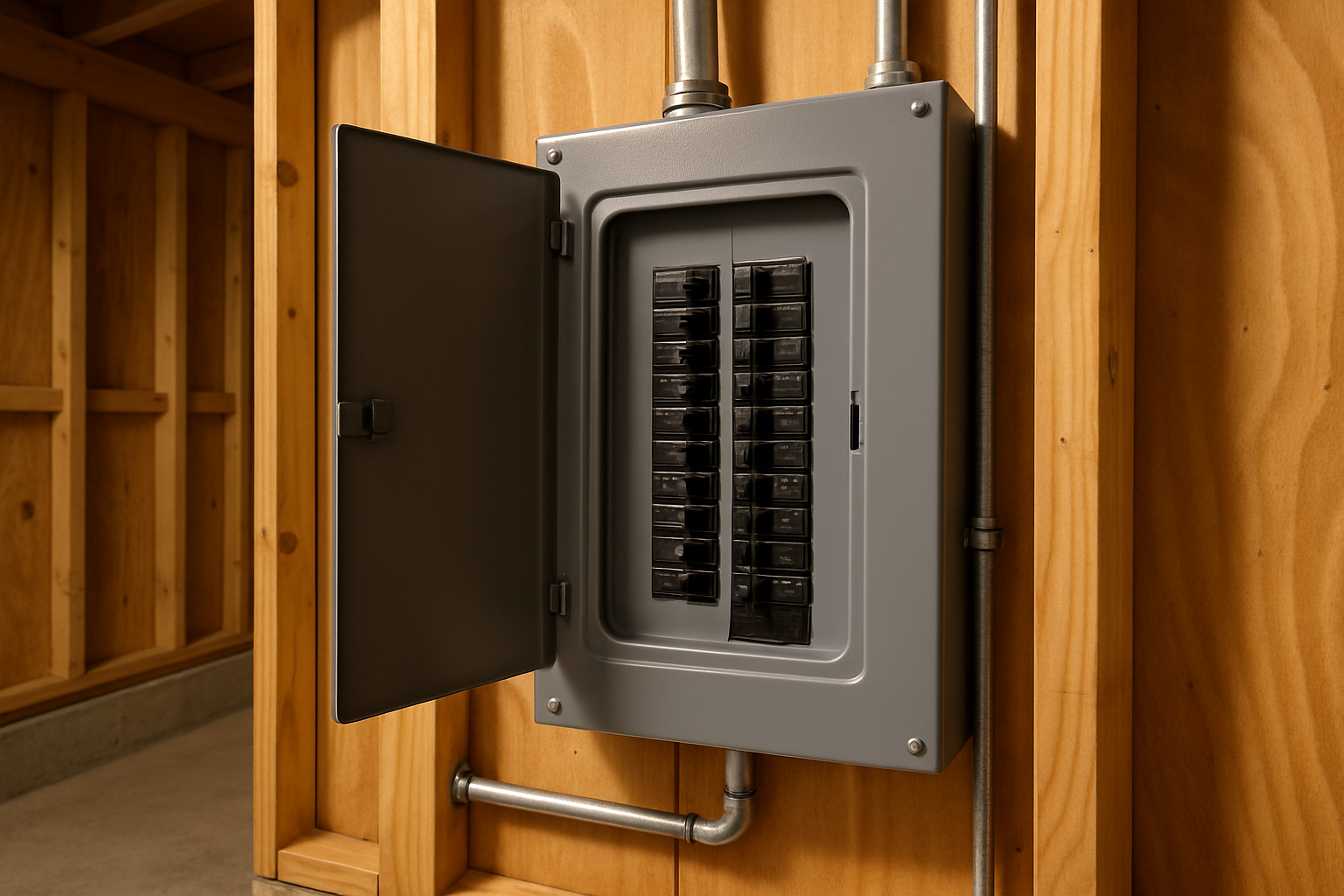
A subpanel, sometimes called a secondary panel or breaker panel, is a smaller distribution box that receives power from your home's main electrical panel and redistributes it through dedicated circuits in a separate structure. Rather than running individual circuit wires hundreds of feet from your main panel, a single feeder cable supplies the subpanel, which then powers everything in the outbuilding cleanly and safely. This approach gives you proper circuit capacity, ground-fault protection, and the ability to expand your setup over time without major rewiring.
Before any work begins, the project requires a permit from the City of Jacksonville or Onslow County, depending on your location. North Carolina's State Building Code and the National Electrical Code (NEC) govern how subpanels must be wired, grounded, and protected. The North Carolina Office of State Fire Marshal maintains oversight of electrical licensing and code compliance in our state, and permitted work ensures your installation is inspected and meets those standards. Skipping the permit process puts your homeowner's insurance, future property sales, and most importantly your family's safety at risk.
The actual installation involves several critical steps that require a licensed electrician. We begin by evaluating your existing main panel to confirm it has available capacity — meaning sufficient amperage headroom and open breaker slots — to support a new feeder circuit. If your panel is already near capacity, a panel upgrade may be necessary before proceeding. Once capacity is confirmed, we size the feeder wire and breaker appropriately for your anticipated load. A typical garage workshop subpanel might be rated for 60 or 100 amps, but heavier equipment demands can require more.
The feeder cable runs from your main panel to the subpanel in the outbuilding — either underground in conduit or overhead, depending on your property layout. Underground runs in conduit are generally the cleaner and safer long-term choice, especially given Eastern North Carolina's severe weather season. At the subpanel itself, the grounding system must be established independently with its own ground rods, as required by the NEC for detached structures. This is a detail that is often mishandled in DIY attempts and can create dangerous fault conditions. The NFPA 70 National Electrical Code is explicit on this point, and our licensed electricians follow these requirements precisely on every installation.
With the subpanel properly installed, we can then wire individual circuits for your specific needs — dedicated circuits for table saws, welders, or air compressors, general-purpose outlets, and appropriate lighting. Each circuit is protected individually, so a tripped breaker in the shop does not affect your home. Fall is actually a great time to schedule this work, since many homeowners are thinking about winterizing their workshops and want reliable, safe power before colder months set in.
We are proud to be the locally owned and operated electrical team that Eastern NC property owners trust for work like this. If you are ready to add a subpanel to your garage, workshop, or outbuilding, call Powerhound Electrical Solutions today at (910) 296-3536 to schedule an assessment and get your project started the right way.