
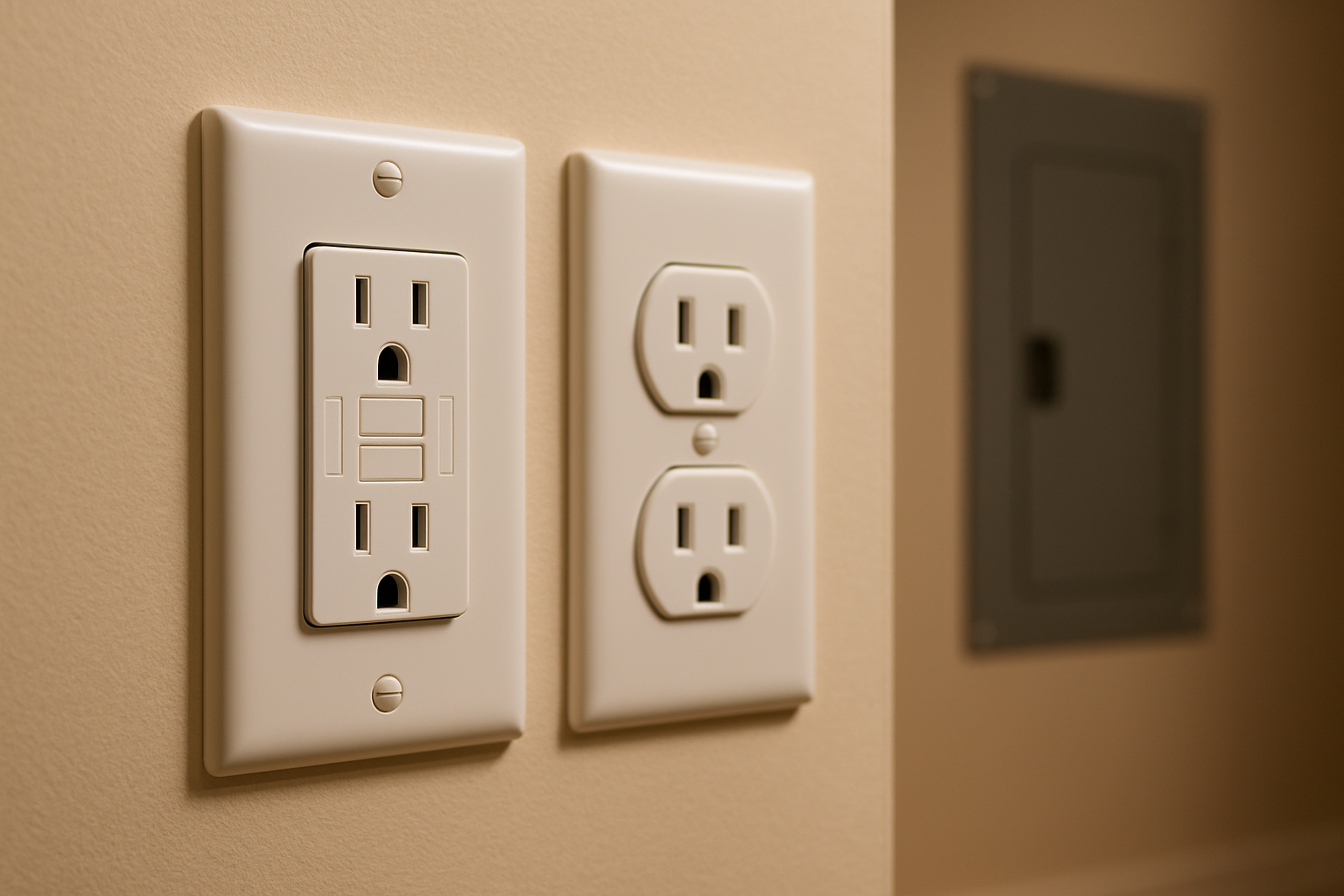
When it comes to home electrical safety, few upgrades make a more immediate difference than proper GFCI and AFCI outlet protection. As a locally owned and operated electrical contractor serving Jacksonville, NC and Eastern North Carolina, we talk with homeowners every week who are surprised to learn their homes may not meet current code requirements for these critical safety devices — and that their insurance or a home sale inspection could flag those gaps.
GFCI stands for Ground Fault Circuit Interrupter, and AFCI stands for Arc Fault Circuit Interrupter. While both protect your home and family, they guard against different hazards. A GFCI outlet monitors the flow of electricity and cuts power almost instantly when it detects a ground fault — meaning electricity is escaping its intended path, often through water or a person. This is exactly why GFCI protection is required in areas where water is present. In a Jacksonville home, that includes bathrooms, kitchens, garages, outdoor outlets, crawl spaces, unfinished basements, and anywhere near a pool or spa. The National Fire Protection Association consistently points to electrical failures and malfunctions as leading causes of home fires, and GFCI devices play a direct role in reducing electrocution risks in wet environments.
AFCI outlets and breakers serve a different but equally important function. They detect dangerous arc faults — abnormal electrical discharges that occur when wiring is damaged, loose, or aging. These arcs generate intense heat that can ignite wall insulation or framing materials before you ever notice a problem. The North Carolina Electrical Code, which follows the National Electrical Code, now requires AFCI protection in nearly all living areas of new construction and renovations, including bedrooms, living rooms, hallways, and dining rooms. If your home was built or last rewired before these requirements took effect, there is a real chance your circuits lack this layer of protection. You can review current North Carolina building and electrical code requirements through the NC Department of Insurance, which administers the state's building codes.
One question we hear often from Eastern NC homeowners is whether older GFCI outlets still work properly. The answer is not always. GFCI devices can wear out over time, and testing them monthly using the test and reset buttons is an important habit. If an outlet trips frequently, fails to reset, or shows no response when tested, it needs to be replaced by a licensed electrician. Similarly, AFCI breakers have a test function that should be checked periodically. These are not tasks we encourage homeowners to handle on their own — working inside an electrical panel carries serious risks, and improper installation of AFCI or GFCI devices can create a false sense of security that leaves your home unprotected.
With hurricane season well underway here in Eastern NC, this is also a good time to remember that power fluctuations and storm damage can compromise outlets and wiring in ways that are not always visible. If your home experienced any flooding, near-lightning strikes, or extended outages recently, having a licensed electrician inspect your GFCI and AFCI protection is a smart step. If your home has an older panel that may not support modern AFCI breakers, learning what a professional electrical panel upgrade involves is a worthwhile starting point. And if you are unsure whether your home's electrical system meets current North Carolina code standards overall, our team can assess that during a comprehensive diagnostic visit.
At Powerhound Electrical Solutions, we are committed to helping Jacksonville and Eastern NC homeowners stay safe, code-compliant, and confident in their electrical systems. If you have questions about GFCI and AFCI outlet requirements, want to schedule an inspection, or need any electrical service, give us a call at (910) 296-3536. We are here to help.