
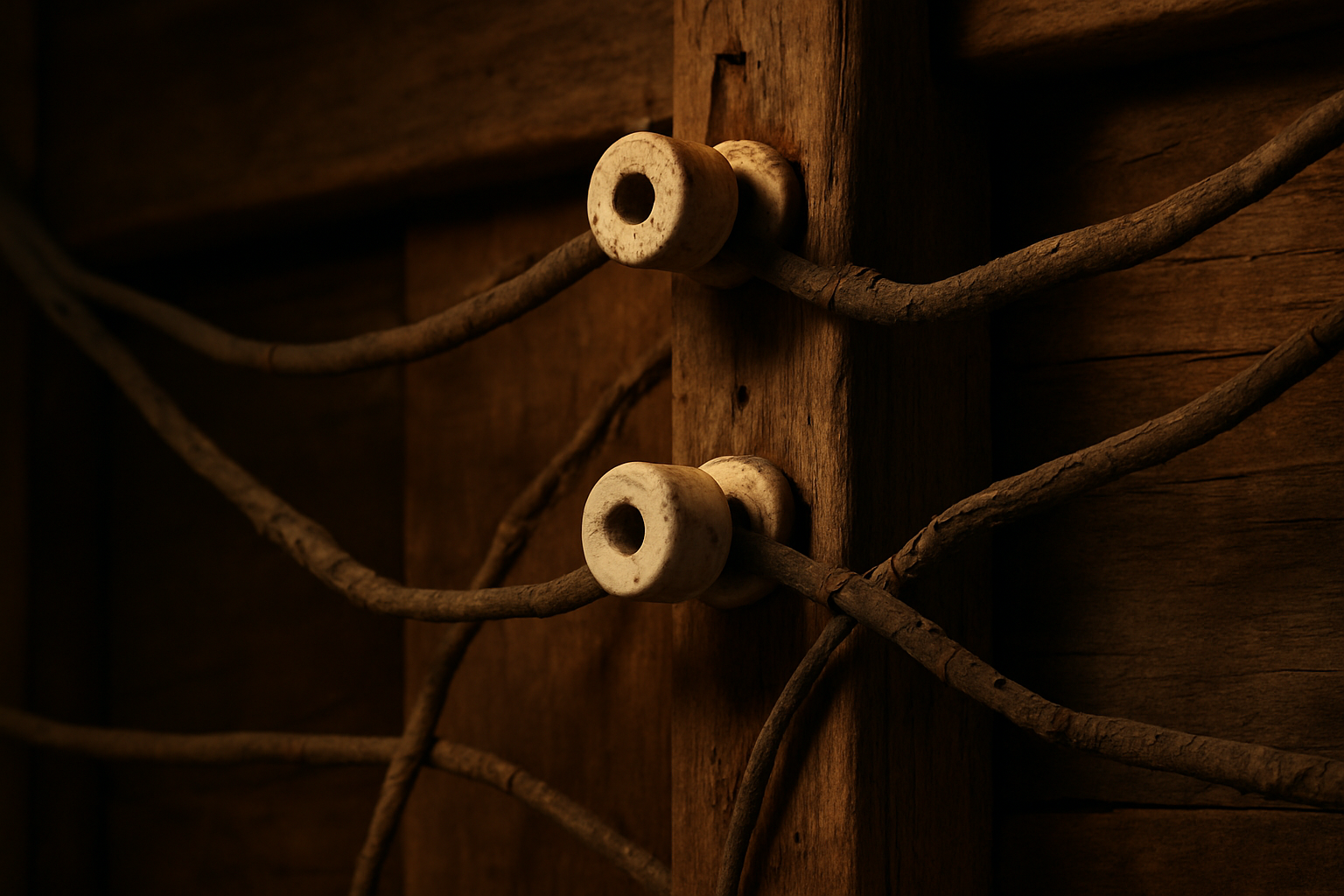
Knob and tube wiring is one of the most serious — and most overlooked — electrical hazards in older homes across Eastern North Carolina. If your home was built before 1950 and has never had a full electrical upgrade, there's a real chance this outdated system is still hiding inside your walls, and the risks it poses deserve serious attention.
Knob and tube wiring was the standard residential wiring method used from roughly the 1880s through the 1940s. The system gets its name from the ceramic knobs used to anchor wires to framing and the ceramic tubes that protect wires where they pass through wood. At the time, it was a functional approach. But compared to modern wiring standards, it has critical shortcomings that make it genuinely dangerous in today's homes.
One of the biggest problems is that knob and tube wiring has no ground wire. Modern electrical systems use a three-wire configuration — hot, neutral, and ground — that provides a safe path for fault current and protects both your appliances and the people using them. Without a ground wire, there is no safety net when something goes wrong. That's a significant concern in any home, but especially in Eastern NC where summer storms and humidity put constant stress on electrical systems.
The insulation surrounding knob and tube wiring is made from rubber and cloth materials that were never designed to last more than a few decades. After 70 or more years, that insulation becomes brittle, cracked, and prone to failure. According to the National Fire Protection Association, electrical failures and malfunctions are among the leading causes of home fires in the United States — and aging wiring systems like knob and tube are a well-documented contributing factor.
Another major risk we see in older Eastern NC homes is what happens when knob and tube wiring gets covered. Over the decades, insulation gets blown or laid into attic spaces directly over these old wires. Knob and tube wiring is designed to dissipate heat by staying open to air. When it gets buried under insulation, heat builds up with nowhere to go — creating a serious fire risk that may not be visible until significant damage has already occurred. The U.S. Consumer Product Safety Commission has long flagged improper handling of older wiring systems as a leading contributor to electrical fires in residential properties.
Homeowners sometimes discover knob and tube wiring during a home inspection or insurance renewal. Many insurance carriers in North Carolina will either refuse to cover homes with active knob and tube wiring or charge significantly higher premiums until the system is remediated. If you're buying, selling, or refinancing an older home in the Jacksonville area, this is something you need to know before it becomes a financial or safety emergency.
As a locally owned and operated electrical contractor serving Jacksonville, NC and Eastern North Carolina, we handle knob and tube remediation as a core part of our residential electrical services. This is not a job for a DIY approach — removing and replacing old wiring requires a licensed electrician who understands load calculations, code compliance, and how to safely transition a home to a modern wiring system. You may also want to read our article on cloth wiring hazards, since many older homes have both systems and the safety concerns overlap significantly.
If you have an older home and aren't sure what's inside your walls, don't wait for a problem to force the issue. Call Powerhound Electrical Solutions at (910) 296-3536 to schedule an electrical inspection. We'll give you an honest assessment of what you have and what it takes to bring your home up to a safe, modern standard.