
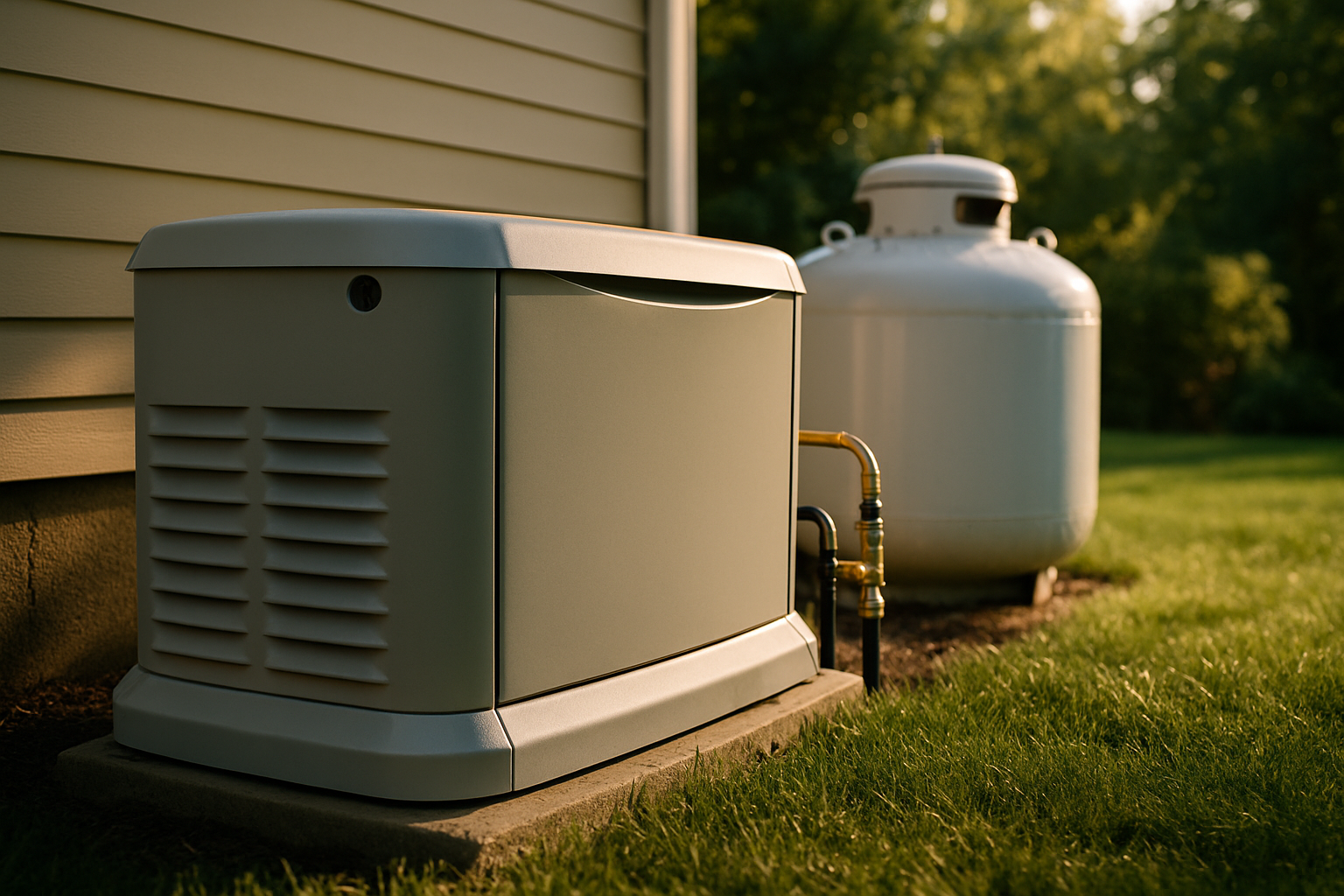
Choosing the right fuel type for your whole-home generator is one of the most important decisions you will make during the installation process, yet it often gets less attention than it deserves. At Powerhound Electrical Solutions, we are locally owned and operated serving Jacksonville, NC and Eastern North Carolina, and we help homeowners navigate this decision every day. When it comes to generator fuel type — natural gas versus propane — the right answer depends on your property, your location, and how you plan to use your backup power system.
Natural gas generators connect directly to your municipal gas line, which means you never have to worry about storing fuel or scheduling deliveries. For homeowners in Jacksonville and other areas of Eastern NC with access to utility gas lines, this is a significant convenience advantage. Because the supply is continuous and managed by your utility provider, a natural gas generator can theoretically run indefinitely during a prolonged outage without any action on your part. The tradeoff is that natural gas lines can be disrupted during major storms or infrastructure damage — the same events that most commonly cause extended power outages in our region.
Propane generators operate from a tank stored on your property, giving you complete fuel independence from the municipal grid. This is particularly valuable for rural homeowners across Eastern North Carolina who may not have access to natural gas service at all. A properly sized propane tank can supply your generator for days or even weeks depending on your load, and it can be refilled proactively before hurricane season. The NFPA 58 standard for LP-Gas storage and handling governs how propane tanks must be installed, positioned, and maintained — requirements that a licensed electrician and your propane supplier will coordinate during installation. What matters most is that your tank is appropriately sized for your generator's fuel consumption rate and that it is installed according to code.
Both fuel types require professional installation by a licensed electrical contractor. This is not a system you want to approach as a do-it-yourself project. Transfer switch wiring, fuel line connections, load calculations, and permit coordination all require the expertise and licensing that our team brings to every Generac generator installation. Improper connections create serious risks including carbon monoxide exposure, which the CDC identifies as one of the leading causes of generator-related fatalities during power outages. Our Generac-certified technicians ensure every installation meets North Carolina electrical code and manufacturer specifications.
Cost is another factor worth considering carefully. Propane typically costs more per BTU than natural gas, which can add up during extended run times. However, propane burns slightly cleaner and is often the only viable option for properties outside utility service areas. Natural gas, while generally less expensive over time, requires that a gas line already be present or extended to your property — an additional infrastructure cost that varies depending on your specific location. We assess all of these variables with you before recommending a system so that your investment makes sense for your home and your budget.
Understanding how fuel choice interacts with your electrical panel and overall home power system is equally important. If you are curious about how a generator installation coordinates with your existing electrical infrastructure, our article on what happens during a professional electrical panel upgrade in Jacksonville NC offers helpful context on how these systems work together.
If you are ready to explore your generator options or have questions about which fuel type makes the most sense for your Eastern NC property, we are here to help. Call Powerhound Electrical Solutions today at (910) 296-3536 to schedule a consultation with our team and get expert guidance tailored to your home.