
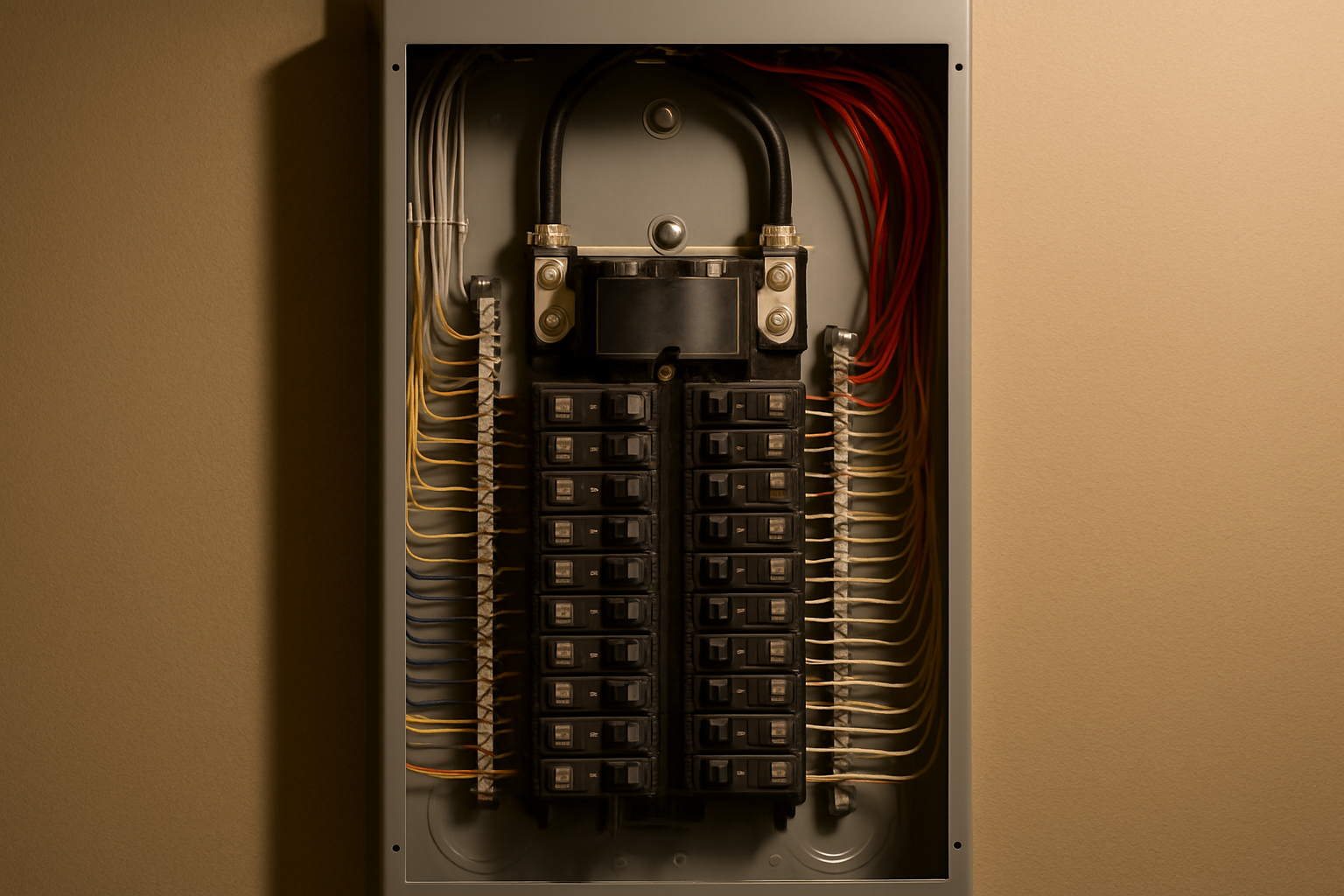
Homeowners across Eastern North Carolina are increasingly interested in solar energy, and for good reason — it can reduce utility costs, add resilience, and increase property value. But one of the most overlooked realities of going solar is that your home's electrical infrastructure has to be ready to support it. At Powerhound Electrical Solutions, we're locally owned and operated serving Jacksonville, NC and Eastern North Carolina, and we've seen firsthand how often a solar installation plan stalls because the existing electrical panel simply isn't up to the job. An electrical panel upgrade is frequently the critical first step that makes solar possible.
Most older homes in our area were built with 100-amp electrical panels, which were perfectly adequate at the time but were never designed to accommodate a modern solar photovoltaic system. When solar panels are installed, the inverter connects directly to your electrical panel to feed power back into your home's circuits. If the panel doesn't have enough capacity or available breaker space, that connection either can't happen safely or won't meet current North Carolina electrical code requirements. Upgrading to a 200-amp panel — or in some cases a 400-amp service for larger homes — creates the headroom needed for both the solar system and your existing electrical load to operate reliably and safely.
Beyond raw amperage, there's the question of breaker space. A solar inverter typically requires a dedicated double-pole breaker, and many panels in homes built before the 1990s are completely full. Some of those panels also carry other concerns — aging electrical panels in older Onslow County homes may have outdated components or brands with known reliability issues that solar installers and inspectors will flag immediately. Addressing these panel issues proactively doesn't just enable your solar project — it makes your entire home's electrical system safer.
North Carolina's interconnection rules, which govern how residential solar systems connect to the utility grid, require that the installation meet all applicable electrical codes. The NC Sustainable Energy Association's interconnection resources outline the standards utilities use when approving grid-tied solar systems, and a properly sized, code-compliant panel is a baseline requirement. The National Electrical Code, referenced by the National Fire Protection Association, also establishes specific requirements for solar PV system connections that only a licensed electrician should handle. Attempting to navigate these requirements without professional expertise creates serious safety risks and can result in a failed inspection that delays your entire solar project.
Fall is actually a smart time to start this process. Contractors and inspectors tend to be more available between hurricane season and the holiday slowdown, and completing your panel upgrade now means your solar installation can move forward in the new year without delays caused by electrical infrastructure issues. Planning ahead also gives you time to evaluate whether your project might benefit from pairing your solar system with a whole-home generator — something worth discussing if grid reliability is part of your motivation for going solar.
At Powerhound Electrical Solutions, our team performs thorough electrical panel evaluations and upgrades that are specifically designed to support solar-ready homes in Jacksonville, NC and throughout Eastern North Carolina. We handle all permitting and ensure every upgrade meets current code requirements so your solar installation has a clear path forward. If you're planning a solar project — or just want to know whether your panel is ready for one — we're here to help. Call us today at (910) 296-3536 to schedule your electrical panel assessment.