
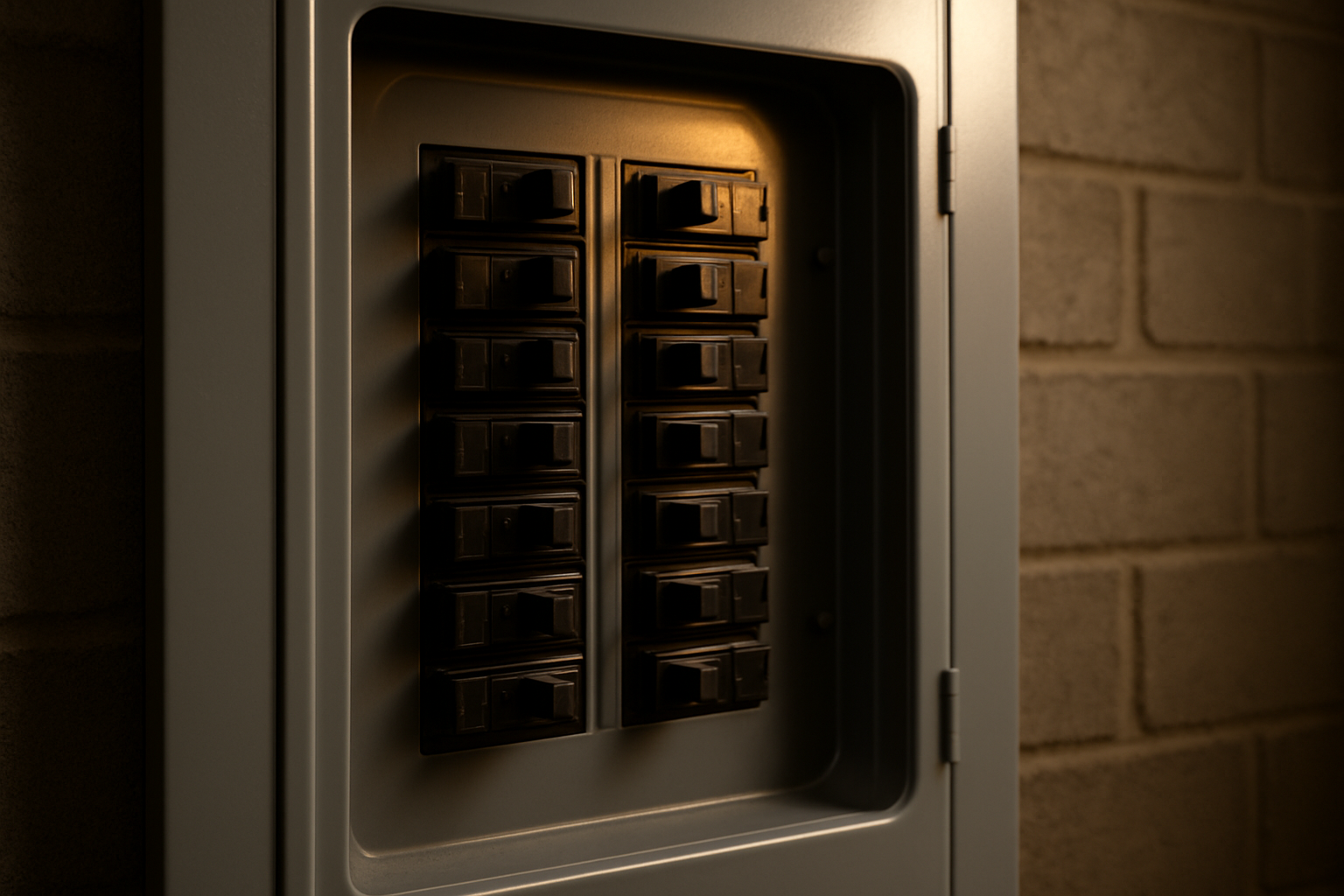
If your circuit breaker keeps tripping, it is more than a minor inconvenience — it is your home's electrical system sending a warning signal that something is wrong. As a locally owned and operated electrical contractor serving Jacksonville, NC and Eastern North Carolina, we at Powerhound Electrical Solutions see this issue regularly, and we want homeowners to understand what is actually happening behind the panel before it becomes a serious safety hazard.
A circuit breaker trips when it detects more electrical current flowing through a circuit than that circuit is safely designed to handle. The most common cause is a simple overloaded circuit — too many devices drawing power from the same line at the same time. During the summer months in Eastern North Carolina, this becomes especially common as homeowners run window AC units, fans, dehumidifiers, and refrigerators simultaneously, pushing circuits well past their intended capacity. The breaker trips to prevent wiring from overheating and potentially causing a fire.
A second cause of frequent circuit breaker trips is a short circuit, which is a more serious problem. A short occurs when a hot wire makes contact with a neutral wire inside an outlet, appliance, or within the wiring itself. Unlike an overload, a short circuit produces an immediate and dramatic surge of current. If you notice a burning smell, scorch marks around an outlet, or hear a popping sound when a breaker trips, those are signs of a short circuit that require immediate professional attention. The National Fire Protection Association reports that electrical failures and malfunctions are among the leading causes of home fires in the United States, which is exactly why we take these warning signs seriously.
A ground fault is another culprit that homeowners often confuse with a standard overload. Ground faults happen when a hot wire contacts a grounded surface — common in bathrooms, kitchens, garages, and outdoor outlets where moisture is present. This is why those areas of your home are required to have GFCI-protected outlets under current electrical code. If breakers tied to those areas keep tripping, a ground fault condition may be present.
Beyond individual circuit issues, a frequently tripping breaker can also point to a failing breaker itself. Breakers do wear out over time, and an aging or damaged breaker may trip under loads it should handle without difficulty. This is particularly relevant in older Eastern NC homes where the electrical panel has not been serviced or upgraded in many years. Our team regularly performs preventative electrical maintenance that catches these aging components before they create bigger problems.
It is also worth noting that persistent tripping can sometimes indicate that your home's overall electrical service capacity is no longer keeping up with modern demand. Homes built decades ago were not designed to support today's electronics, appliances, EV chargers, and HVAC systems. A panel upgrade or service upgrade may be the right long-term solution. The U.S. Consumer Product Safety Commission offers helpful guidance on recognizing electrical hazards in the home.
What we always tell homeowners is this: a tripping breaker is doing its job, but repeated trips mean the underlying problem is not going away on its own. Resetting the breaker without addressing the root cause is not a solution — it is a risk. Attempting to investigate wiring or tamper with your panel without a license is dangerous and can void your homeowner's insurance coverage. Our licensed electricians have the diagnostic tools and expertise to find the real source of the problem and fix it correctly the first time.
If your breakers are tripping frequently, do not wait for the problem to escalate. Call Powerhound Electrical Solutions today at (910) 296-3536. We proudly serve Jacksonville, NC and the surrounding communities of Eastern North Carolina with trusted, professional electrical diagnostics and repair.